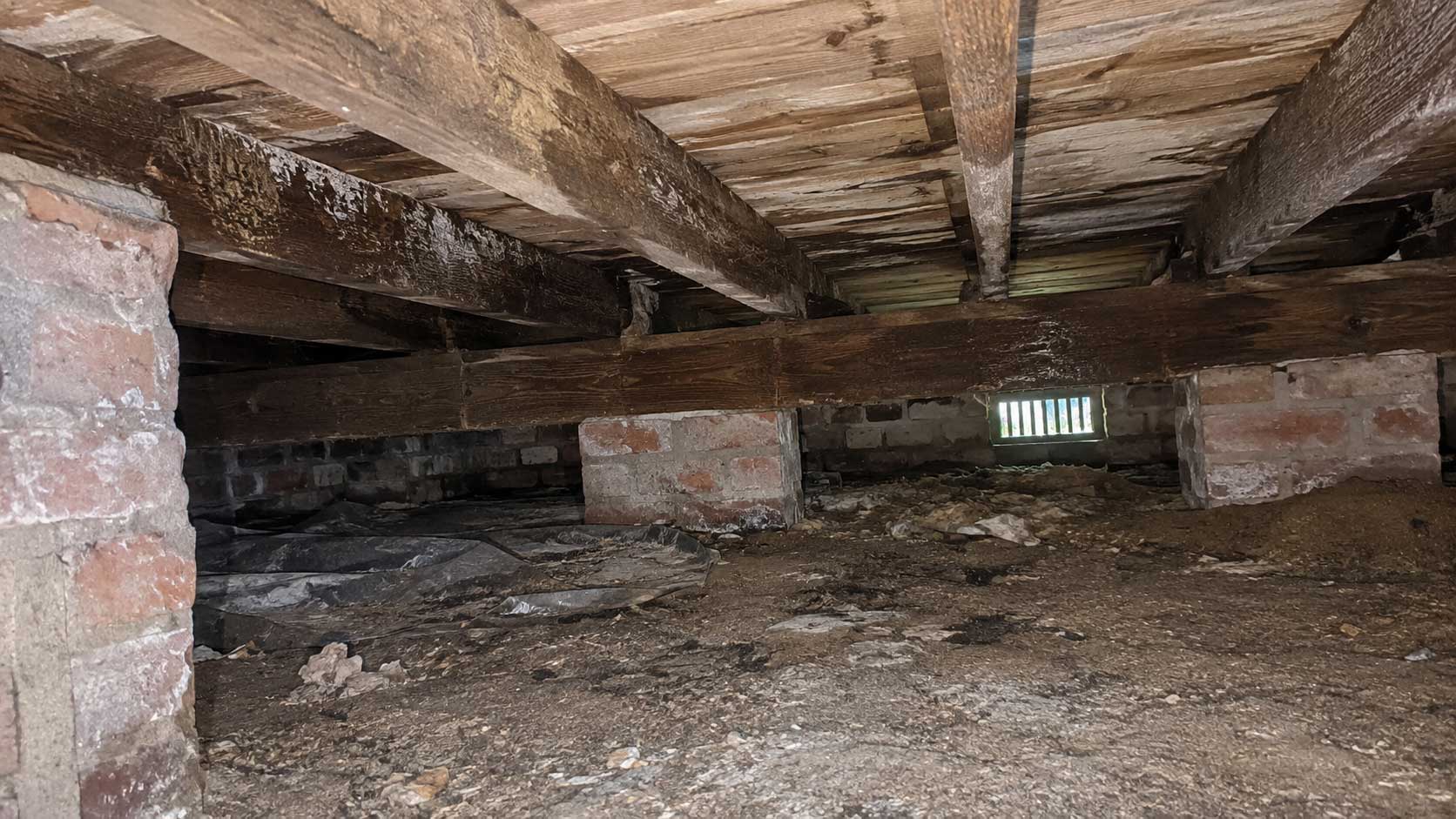
Start by checking the joist ends
When rot is found beneath a suspended floor, the ends of the joists are often a good place to start. They can stay damp where they touch brickwork, even if most of the joist is dry.
Poor ventilation slows drying
Blocked air bricks, raised paving, insulation or later alterations can reduce air movement beneath the floor. Moisture from the ground or walls then remains around the timber for longer.
A soft floor may have more than one cause
Loose boards, undersized joists and damaged supports can all make a floor feel springy. Opening-up is often needed before the cause can be separated from true timber decay.
Repair the damp source before closing the floor
A new joist inserted into the same wet wall pocket can begin decaying again. The wall, ventilation and any plumbing or rainwater defect need to be dealt with as part of the repair.
Useful technical sources
These links provide background guidance. A particular building still needs its own inspection.