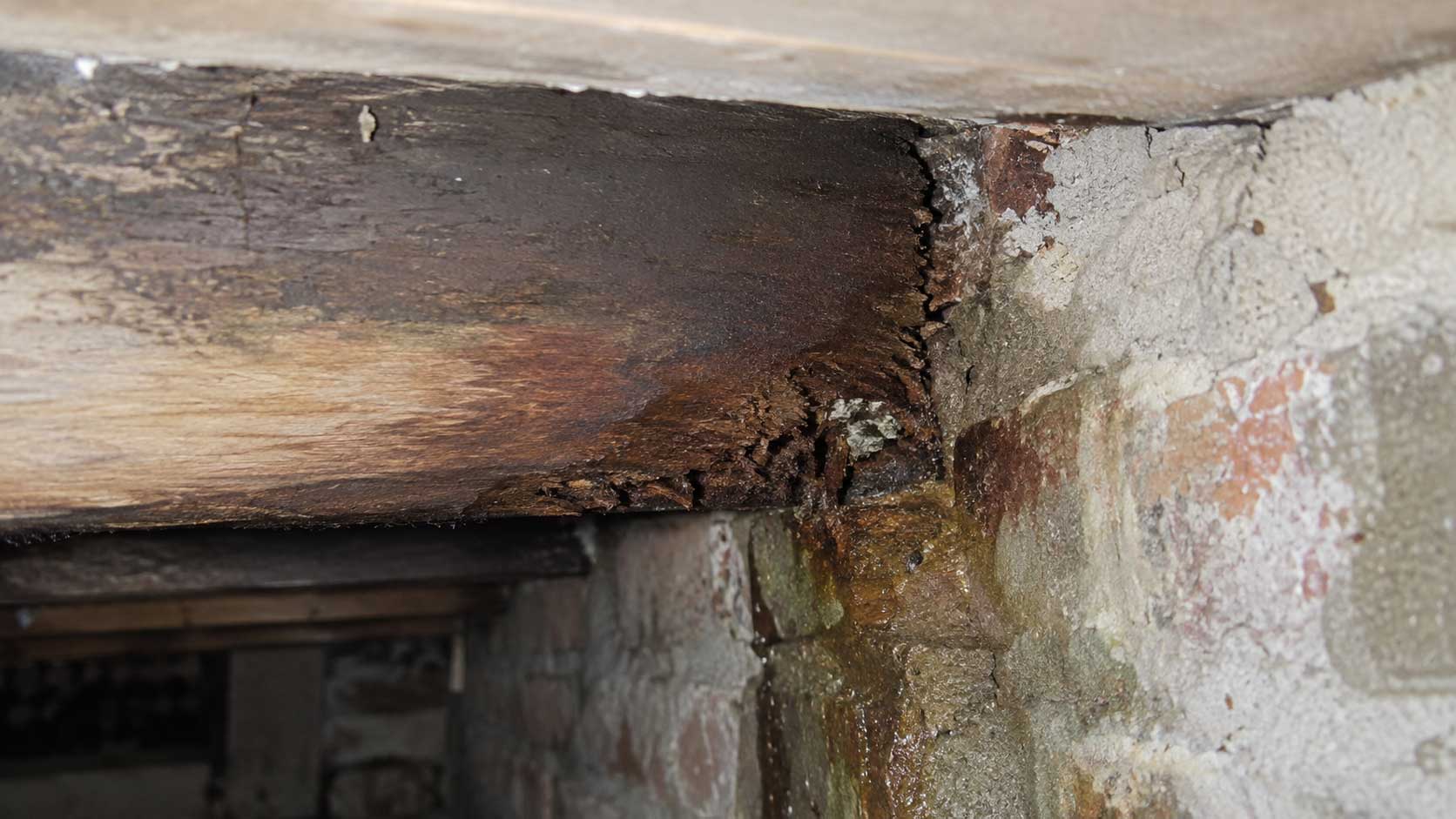
Check where the joist meets the wall
In many older houses, floor joists sit in pockets in the brickwork. If the wall stays damp, the timber inside it can rot while the exposed length of joist still looks perfectly sound.
Floor movement is an important clue
A floor that dips close to an outside wall may have lost support at the joist ends. Boards can remain largely intact while the joists beneath them have weakened.
Do not replace the timber into the same wet pocket
A new end built back into persistently damp masonry can repeat the failure. The moisture source and drying of the wall need attention before or alongside the structural repair.
Several joists may share the same problem
If the damp source affects a length of wall, inspect neighbouring bearings. The worst joist is often only the first one that became noticeable.
Useful technical sources
These links provide background guidance. A particular building still needs its own inspection.