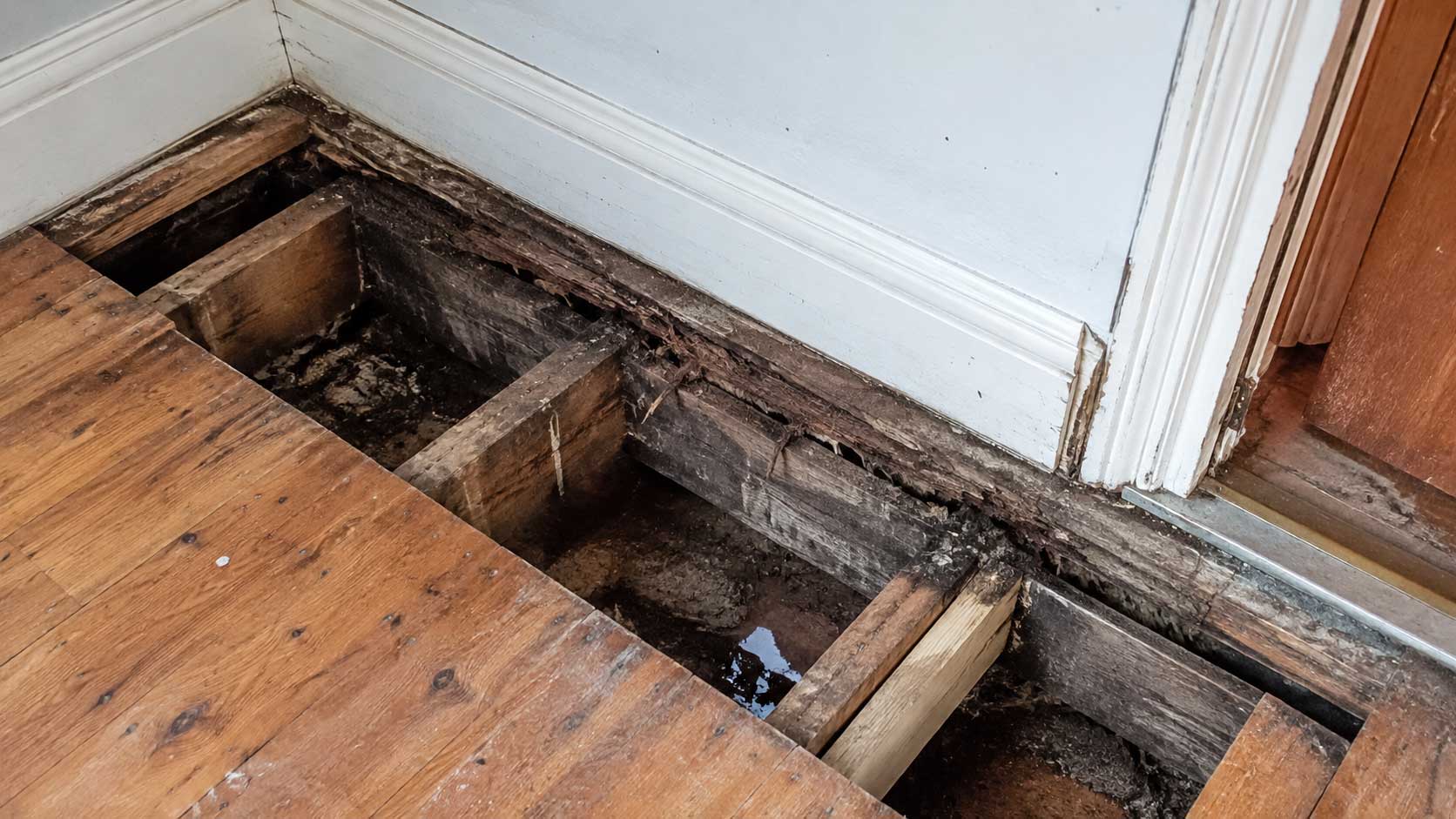
What might be happening
Local decay does not automatically mean all the boards are defective; however, similar hidden conditions can affect a wider run.
A timber floor can look perfectly ordinary from above while the damage is hidden underneath. The first job is to work out whether the boards themselves are affected or whether the joists and their supports need attention.
What you can look for
Ask for the proposed extent to be marked and for evidence of which boards and supports are unsound.
You do not need to start taking the building apart yourself. If access is difficult, ask the person inspecting it to explain what needs to be opened up and why. Photographs of hidden defects are useful, especially when you are comparing quotations.
Putting it right
Selective replacement is often possible when sound boards and fixings can safely remain; widespread damage may justify more extensive work.
Be wary of a quotation that deals only with the damaged wood and says nothing about the water or building defect behind it. Once the cause has been dealt with, the remaining timber can be checked and the necessary repairs planned.
When to call someone in
Do not confuse a cosmetic finish problem with genuine structural deterioration.
A carpenter or joiner may be right for a local timber repair. If the problem involves a leak, you may need a plumber or roofer first. Where supporting timbers have moved, sagged or seriously weakened, get advice from someone qualified to assess the structure.
Questions worth asking
- Is the problem in the floorboards, the joists or where the joists sit in the wall?
- Can you show me the extent of the damage before any sound timber is removed?
- What caused it, and how will that cause be put right?