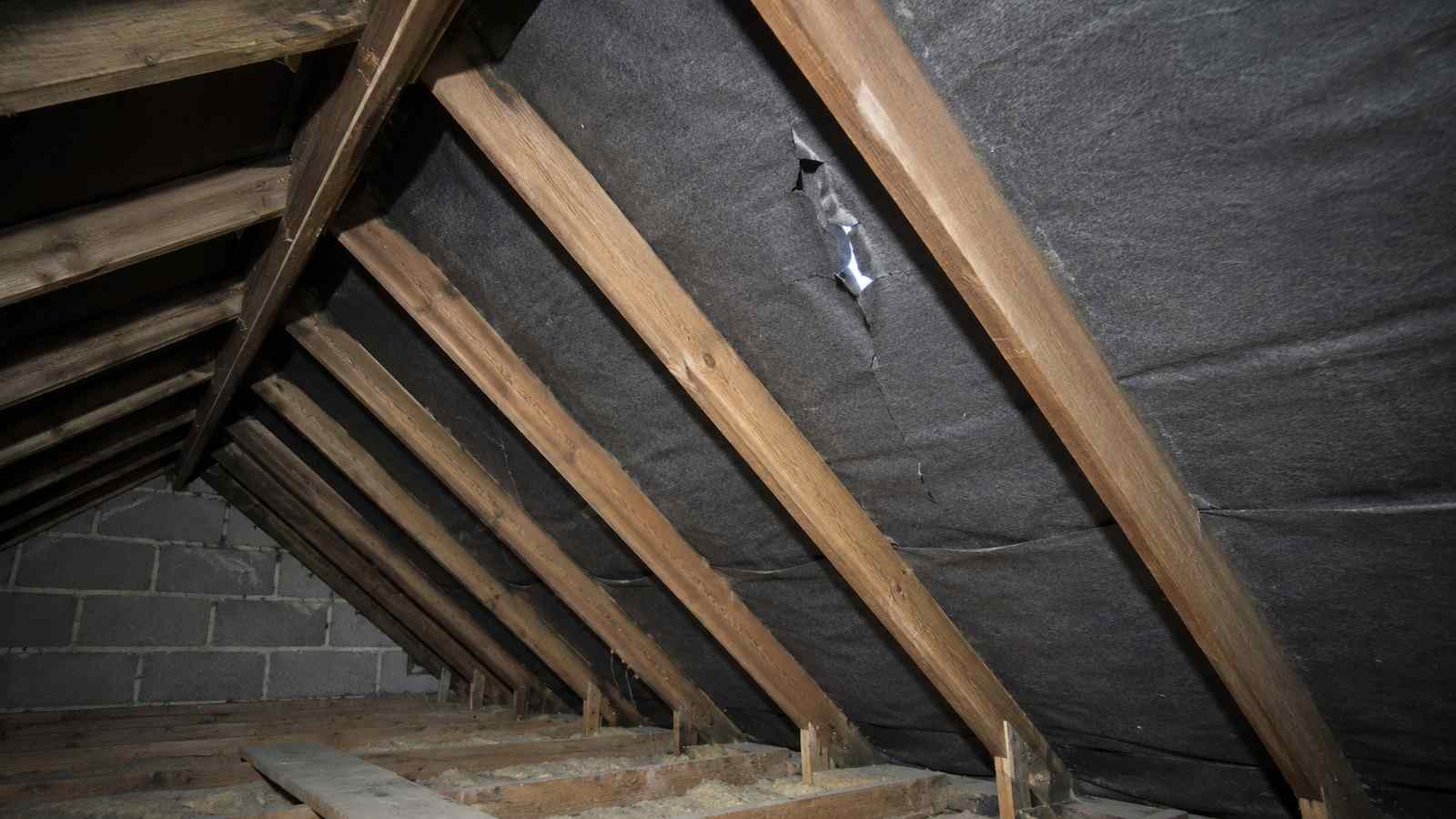
What might be happening
Water can travel along felt, battens and timbers before appearing on the ceiling, so the drip point may not locate the roof defect.
Roof timbers need to be examined alongside the roof covering, flashings and ventilation. A dark mark is not necessarily rot, but timber that has softened or lost strength deserves a proper inspection.
What you can look for
Inspect upstream roof junctions, insulation, rafters, boarding and joist ends for previous wetting.
You do not need to start taking the building apart yourself. If access is difficult, ask the person inspecting it to explain what needs to be opened up and why. Photographs of hidden defects are useful, especially when you are comparing quotations.
Putting it right
Repair the roof and verify drying; replace timbers only where their strength or serviceability has been compromised.
Be wary of a quotation that deals only with the damaged wood and says nothing about the water or building defect behind it. Once the cause has been dealt with, the remaining timber can be checked and the necessary repairs planned.
When to call someone in
A newly dry ceiling does not confirm the roof structure is sound.
A carpenter or joiner may be right for a local timber repair. If the problem involves a leak, you may need a plumber or roofer first. Where supporting timbers have moved, sagged or seriously weakened, get advice from someone qualified to assess the structure.
Questions worth asking
- Where is water entering the roof, if there is a leak?
- Which timbers have actually lost strength?
- Will the proposed repair deal with the roof defect as well as the timber?