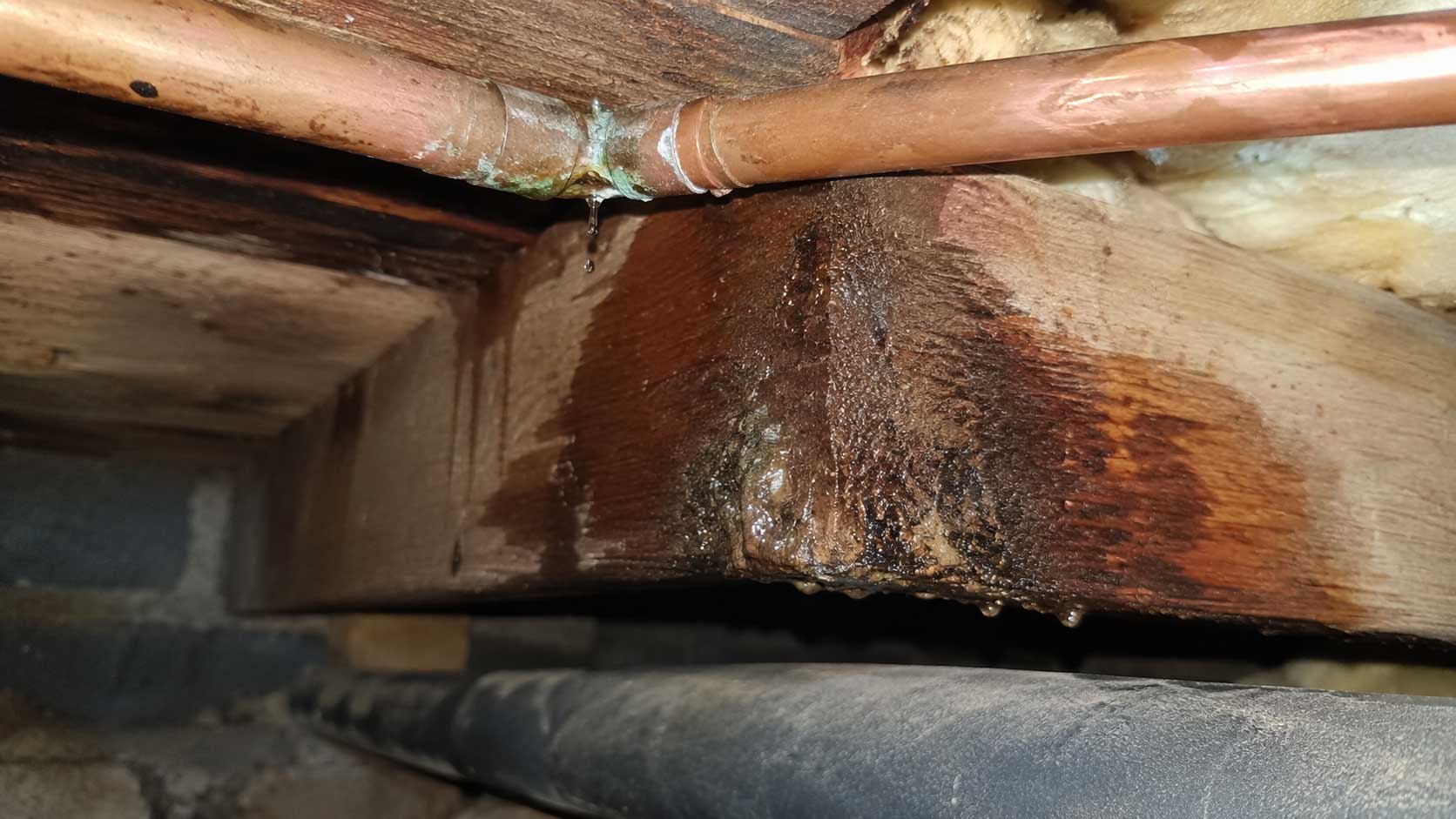
What might be happening
Small supply or trap leaks can wet the cabinet repeatedly; the damage may be superficial or extend below floor level.
Water can find its way beneath a floor or behind a fitted unit without leaving a dramatic stain. By the time the damage becomes visible, the leak may have been there for some time.
What you can look for
Dry the cupboard, test individual fittings and examine the floor and adjoining wall, including concealed areas.
You do not need to start taking the building apart yourself. If access is difficult, ask the person inspecting it to explain what needs to be opened up and why. Photographs of hidden defects are useful, especially when you are comparing quotations.
Putting it right
Replace failed pipe seals or fittings, then renew damaged cabinetry and any weakened floor materials.
Be wary of a quotation that deals only with the damaged wood and says nothing about the water or building defect behind it. Once the cause has been dealt with, the remaining timber can be checked and the necessary repairs planned.
When to call someone in
Do not assume all staining indicates fungal rot; check whether timber has truly softened.
A carpenter or joiner may be right for a local timber repair. If the problem involves a leak, you may need a plumber or roofer first. Where supporting timbers have moved, sagged or seriously weakened, get advice from someone qualified to assess the structure.
Questions worth asking
- Can the leak be traced and stopped before the floor is repaired?
- What is happening to the timber out of sight?
- How will the area be dried and checked before it is covered again?