Why damp timber is vulnerable
Timber can last for generations if it stays dry. When it is repeatedly wetted or remains damp for a long time, fungi can begin to break it down. The important job is to find out where the moisture is coming from.
One reading needs context
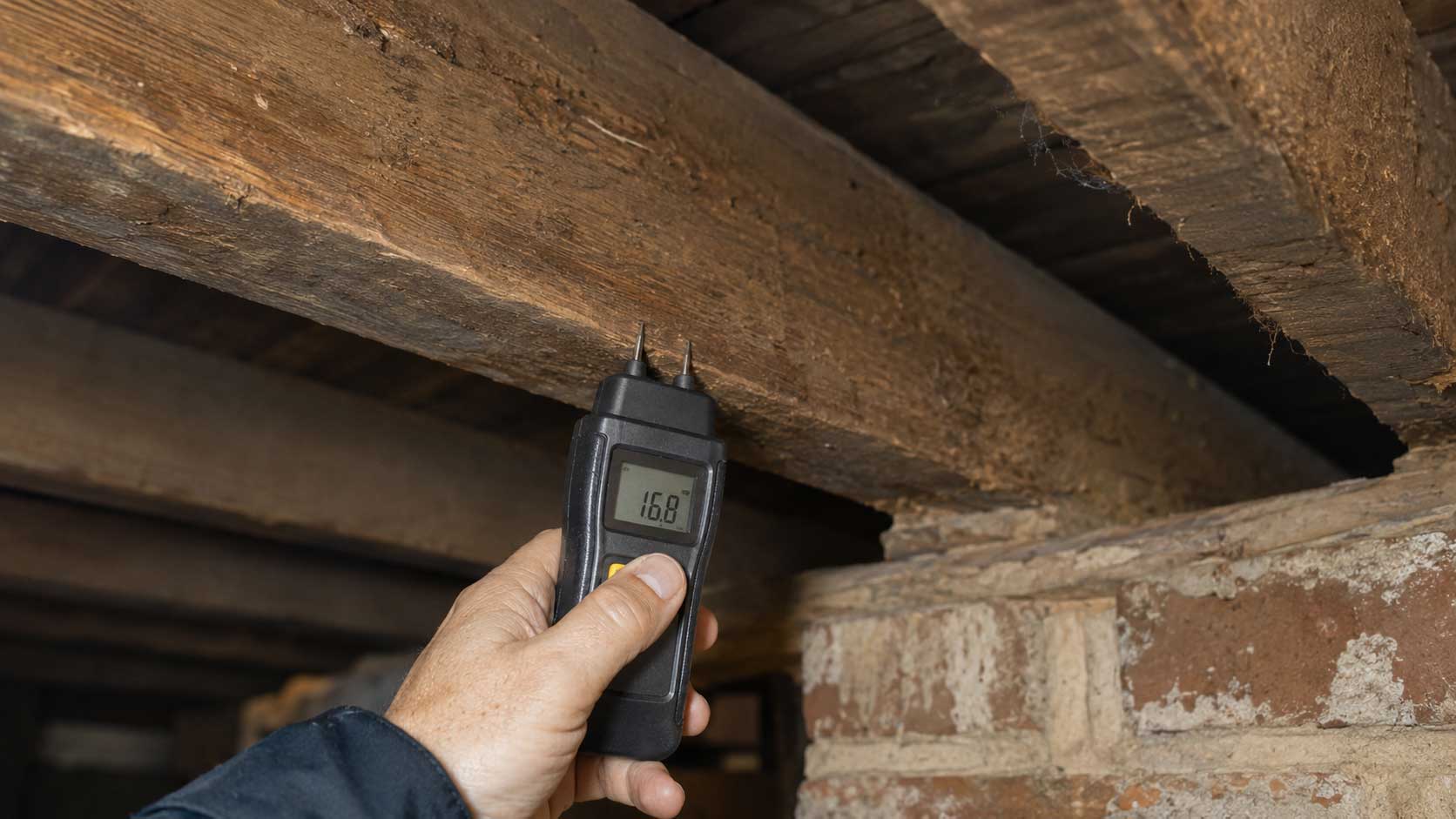
A moisture meter can help compare one area with another, but readings are affected by timber species, salts, temperature and the type of meter used. The important question is whether the timber is persistently wet and why.
A high reading immediately after a leak has been repaired is different from the same reading months later with no drying taking place.
Look for a pattern
Several wet joist ends along one outside wall may point towards damp masonry or poor sub-floor ventilation. One wet rafter beneath a valley suggests something more local. Widespread droplets across loft timbers are more consistent with condensation.
Patterns often tell you more than an isolated number.
Timber needs time to dry
Drying too aggressively can cause shrinkage, twisting and splitting. After flooding or a major leak, controlled drying and monitoring may be needed before repair decisions are made.
The goal is not simply to make a meter show a low figure as quickly as possible, but to return the timber and surrounding building fabric to stable conditions.
Useful technical sources
These links provide background guidance. A particular building still needs its own inspection.