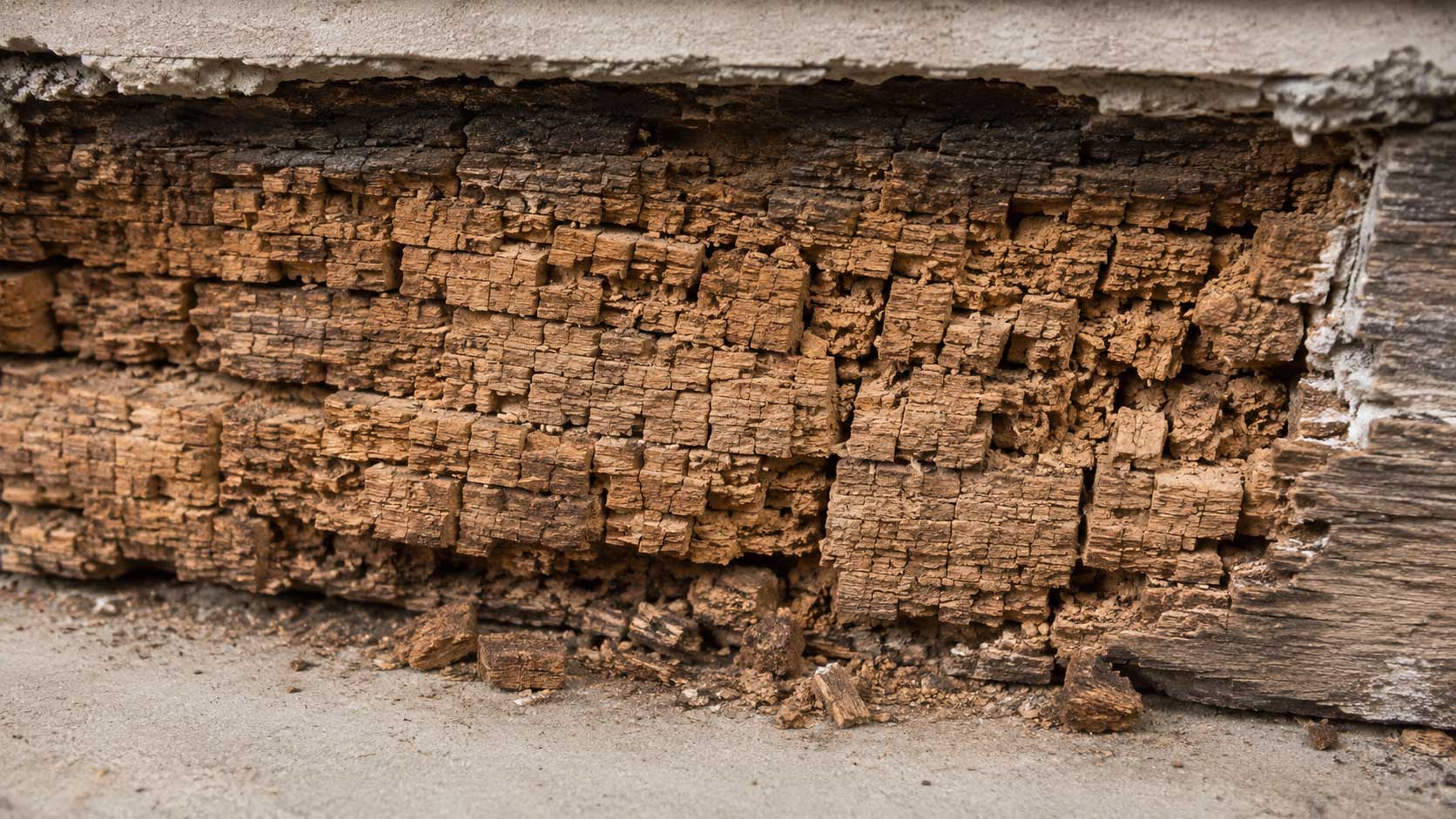
Why rotten wood sometimes breaks into blocks
Some brown rots leave timber cracked across and along the grain, creating a pattern of small blocks. When the damage is advanced, those blocks may crumble or break away easily.
Dry old timber can also crack
Age, heat and repeated drying can produce checks in timber that are not active fungal decay. The depth of the cracks, softness, weight loss and surrounding fungal evidence help distinguish the two.
Strength loss can be greater than the surface suggests
A joist may retain its original outline while much of the internal wood has lost strength. Where the member is structural, superficial inspection is not enough if the timber feels brittle or breaks away.
Find out why the timber stayed wet
Cuboidal cracking tells you about the type of damage; it does not explain the building defect that caused it. The source of the dampness still needs to be traced.
Useful technical sources
These links provide background guidance. A particular building still needs its own inspection.