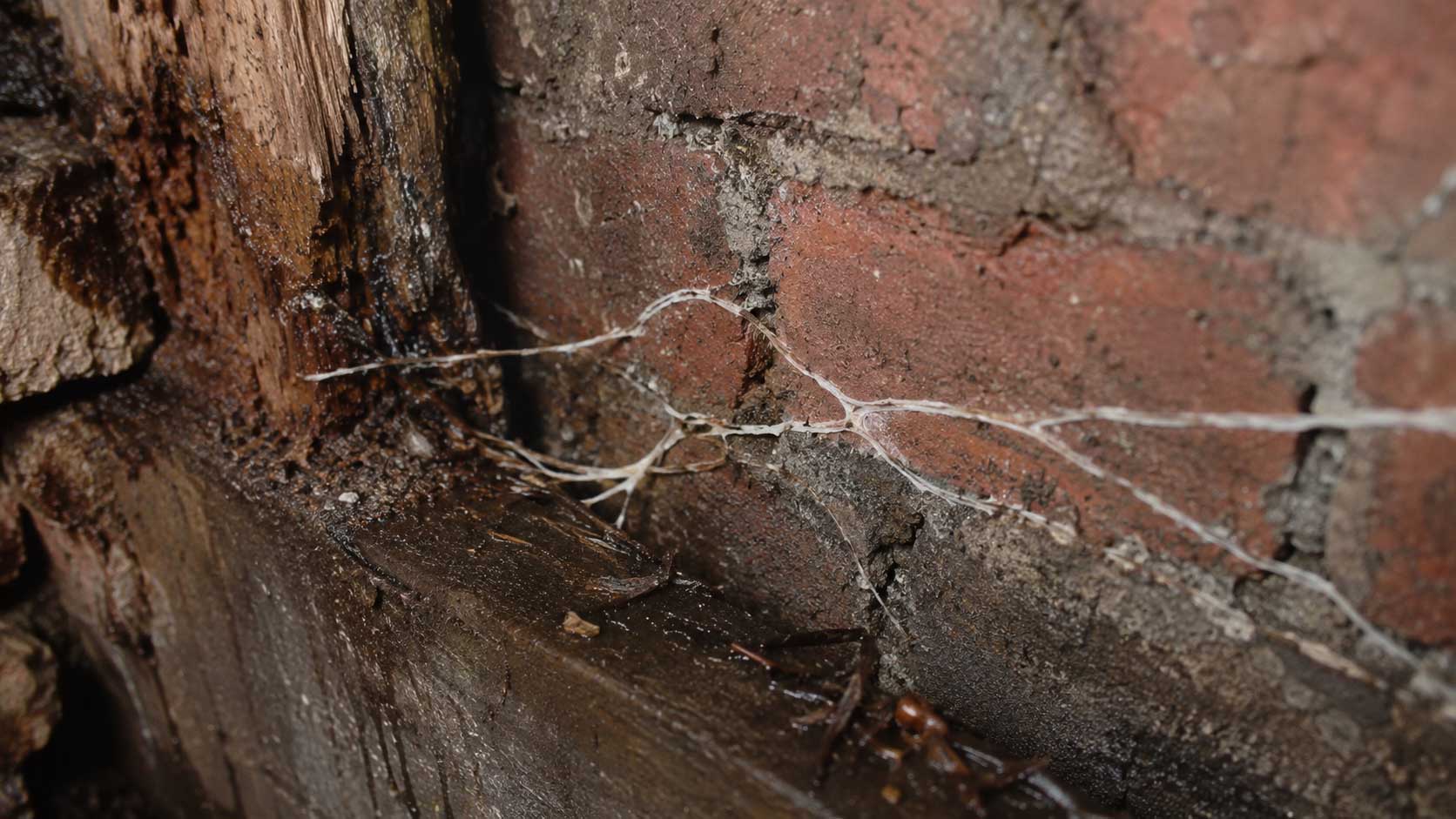
Dry rot can grow across brickwork
Dry rot does not feed on brick or mortar. However, its fungal growth can travel across damp masonry towards other pieces of timber. That is why growth may appear on a wall between two areas of decay.
Moisture in the wall helps maintain the route
A damp wall, leaking gutter or plumbing defect can create a humid concealed path between pieces of timber. Drying the masonry is therefore part of controlling the conditions.
Do not assume every brick needs treatment
The important questions are where the fungus is active, what timber has been affected and whether the wall remains damp. Aggressive removal of sound masonry can cause unnecessary damage, particularly in older buildings.
Check timber on the other side
Where growth disappears into a wall or floor junction, nearby embedded timber, joist ends and wall plates deserve attention. The survey should follow the construction rather than stopping at the visible surface.
Useful technical sources
- Historic England — Timber Decay in Buildings and its Treatment
- Historic England — Timber Treatments and Pest Control
These links provide background guidance. A particular building still needs its own inspection.