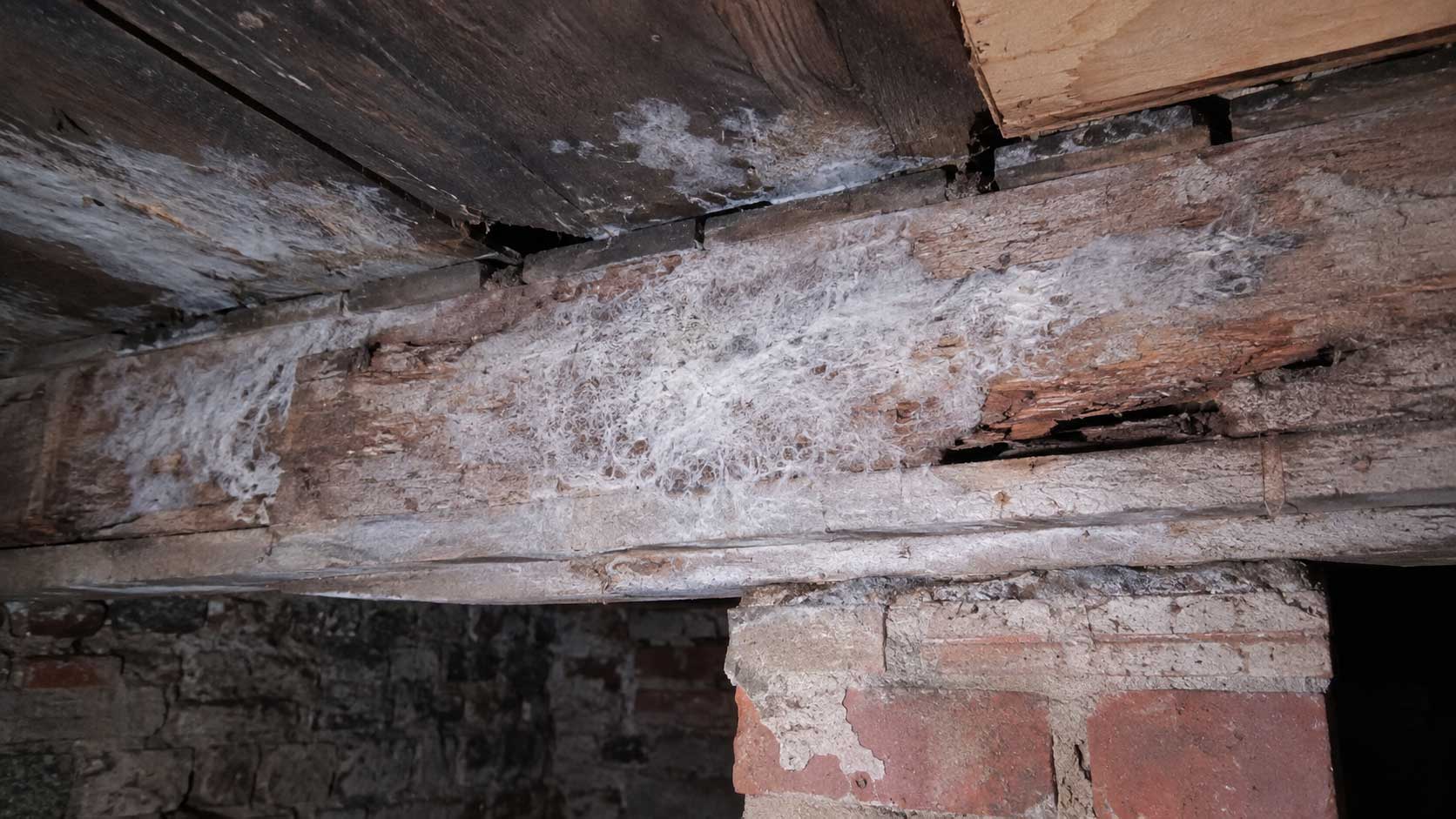
What the white growth may look like
Dry rot can produce pale, cotton-like growth in a damp, sheltered space. As it dries, the growth may look greyer and less obvious. Its appearance is a useful clue, but it is not enough to identify the fungus on its own.
Growth can cross non-timber surfaces
The fungus can extend across masonry while seeking another source of timber and moisture. This does not mean brick or mortar is being used as timber-like food; it means the growth is using the surface as a route.
Look beneath and behind the visible patch
Mycelium at the edge of a floor or skirting may continue into a joist pocket or behind plaster. Opening-up should be proportionate, but hidden timber needs checking where the visible growth disappears into the construction.
Activity depends on the environment
If the structure dries, conditions become less favourable for continued decay. Timber that has already lost strength may still need repair even after the fungal activity stops.
Useful technical sources
- Historic England — Timber Decay in Buildings and its Treatment
- Historic England — Timber Treatments and Pest Control
These links provide background guidance. A particular building still needs its own inspection.