What might be happening
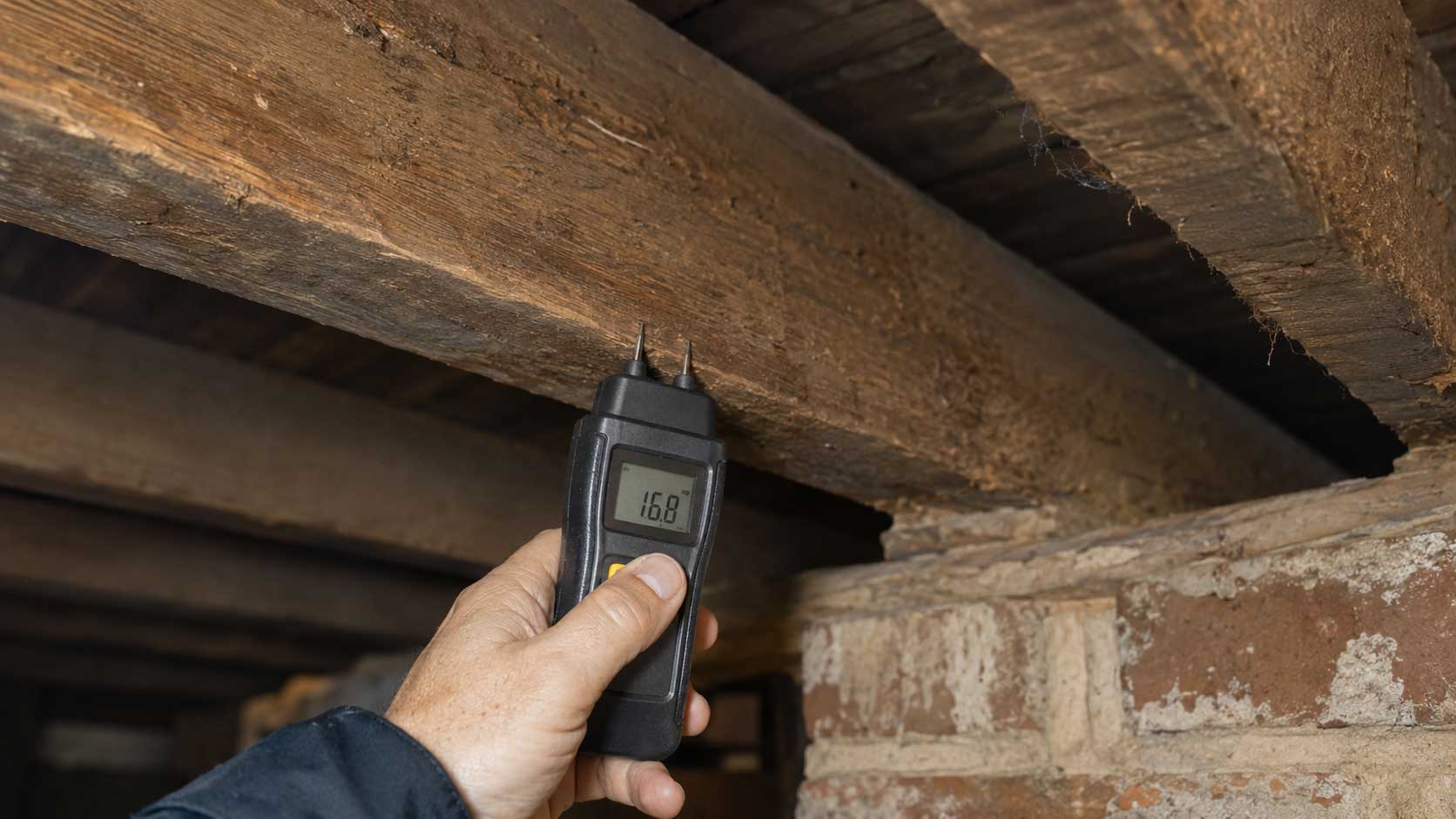
A moisture meter is a useful investigation tool, but it does not identify the source of water and it cannot tell you by itself whether timber needs replacing.
Moisture readings are useful evidence of conditions conducive to decay, not a direct test for fungal species or structural soundness.
Before agreeing to treatment or extensive replacement, it is reasonable to ask what has actually been found, how far the damage extends and what is allowing it to happen.
What you can look for
Ask what meter was used, how the reading was taken and whether concealed defects or plumbing leaks have been checked.
You do not need to start taking the building apart yourself. If access is difficult, ask the person inspecting it to explain what needs to be opened up and why. Photographs of hidden defects are useful, especially when you are comparing quotations.
Putting it right
Combine readings with visual inspection, timber condition and an understanding of the building's moisture sources.
Be wary of a quotation that deals only with the damaged wood and says nothing about the water or building defect behind it. Once the cause has been dealt with, the remaining timber can be checked and the necessary repairs planned.
When to call someone in
Do not diagnose rising damp or dry rot from a single meter number.
A carpenter or joiner may be right for a local timber repair. If the problem involves a leak, you may need a plumber or roofer first. Where supporting timbers have moved, sagged or seriously weakened, get advice from someone qualified to assess the structure.
Questions worth asking
- What evidence supports the diagnosis and proposed treatment?
- Which parts of the work are essential and which are optional?
- Will you put the findings, scope and exclusions in writing?