Recognising possible dry rot
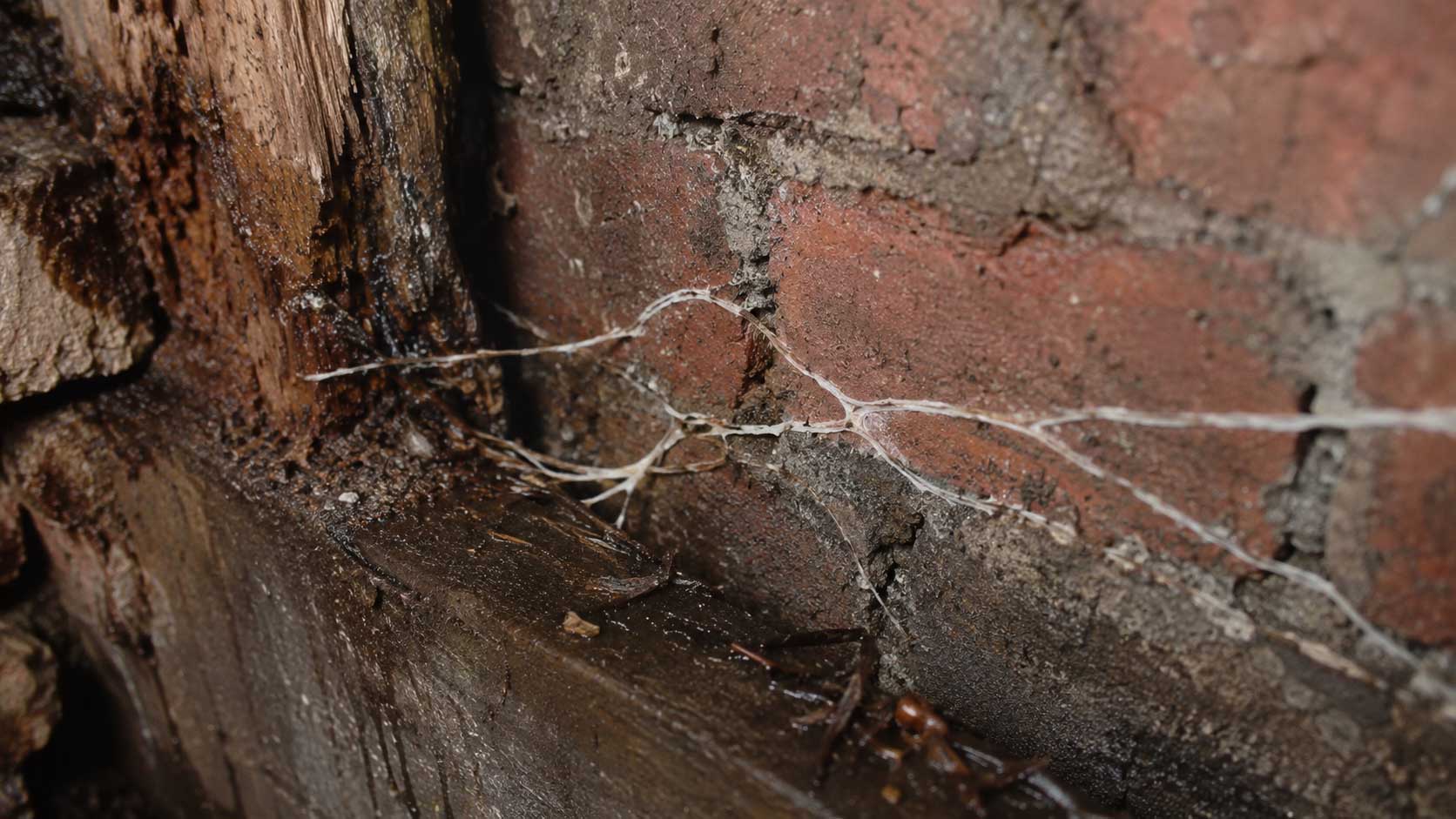
Dry rot can leave wood brittle and cracked into blocks. You may also find pale fungal growth, thicker strands or reddish-brown spore dust. No single sign is enough to be certain, particularly if the affected timber is hidden.
Mycelium can change with conditions
Fresh growth can look pale and cotton-wool-like in humid conditions. Older growth may become thinner and greyer. Strands can remain after the active growth has changed, which makes age and activity harder to judge from appearance alone.
Spores can travel far from the fruiting body
Dry rot produces rusty brown spores that can settle on nearby surfaces and cobwebs. Spore dust is useful evidence, but spores themselves are common and only become a problem where the timber and moisture conditions allow growth.
Confirm the moisture source
A convincing diagnosis should explain why dry rot developed at that particular point in the building. If the damp source is not understood, the investigation is incomplete.
Useful technical sources
These links provide background guidance. A particular building still needs its own inspection.